| Cruise Region : South Africa / Madagascar, Indian Ocean |
| Company : Azamara Cruises |
| Ship : Azamara Onward |
| Journey Start : Tue 09 May 2028 |
| Journey End : Fri 02 Jun 2028 |
| Count Nights : 24 nights |
| Day | Date | Port | Arrival | Departure |
|---|---|---|---|---|
| 1 | 9.05 Tue | Cape Town / South Africa | 20:00 | |
| 2 | 10.05 Wed | Day at sea / Sea | ||
| 3 | 11.05 Thu | Luderitz / Namibia | 08:00 | 16:00 |
| 4 | 12.05 Fri | Walvis Bay / Namibia | 11:00 | |
| 5 | 13.05 Sat | Walvis Bay / Namibia | 20:00 | |
| 6 | 14.05 Sun | Day at sea / Sea | ||
| 7 | 15.05 Mon | Day at sea / Sea | ||
| 8 | 16.05 Tue | Day at sea / Sea | ||
| 9 | 17.05 Wed | Jamestown / Saint Helena | 08:00 | 17:00 |
| 10 | 18.05 Thu | Day at sea / Sea | ||
| 11 | 19.05 Fri | Day at sea / Sea | ||
| 12 | 20.05 Sat | Day at sea / Sea | ||
| 13 | 21.05 Sun | Day at sea / Sea | ||
| 14 | 22.05 Mon | Day at sea / Sea | ||
| 15 | 23.05 Tue | Praia / Cape Verde | 09:00 | 17:00 |
| 16 | 24.05 Wed | Day at sea / Sea | ||
| 17 | 25.05 Thu | Day at sea / Sea | ||
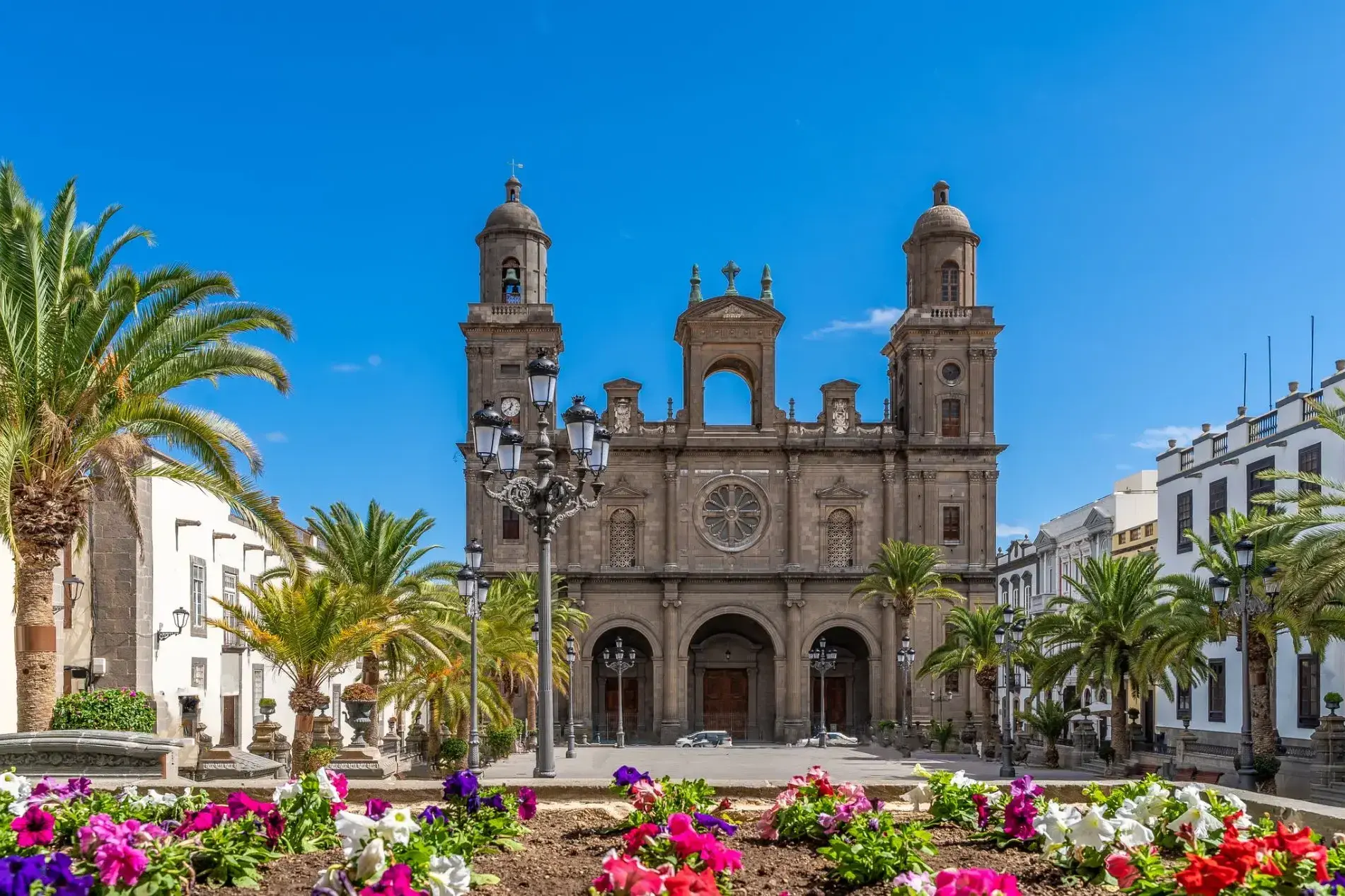
| 18 | 26.05 Fri | Las Palmas (Gran Canaria) / Spain | 06:00 | 20:00 |
| 19 | 27.05 Sat | Arrecife / Spain | 08:00 | 17:00 |
| 20 | 28.05 Sun | Agadir / Morocco | 08:00 | 14:00 |
| 21 | 29.05 Mon | Casablanca / Morocco | 09:00 | 22:00 |
| 22 | 30.05 Tue | Gibraltar / Great Britain | 13:00 | 22:00 |
| 23 | 31.05 Wed | Malaga / Spain | 08:00 | 22:00 |
| 24 | 1.06 Thu | Day at sea / Sea | ||
| 25 | 2.06 Fri | Barcelona / Spain | 06:00 |
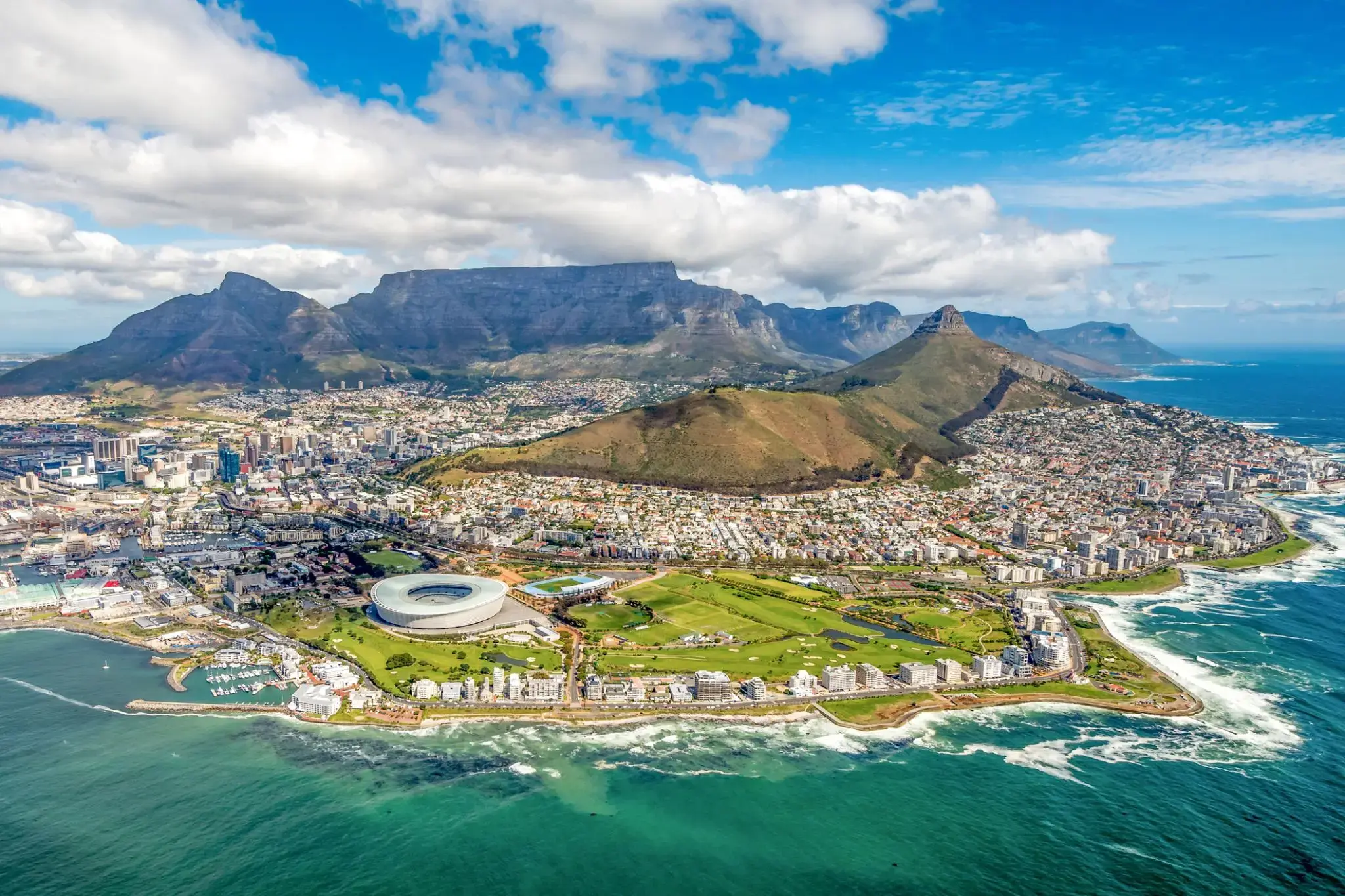
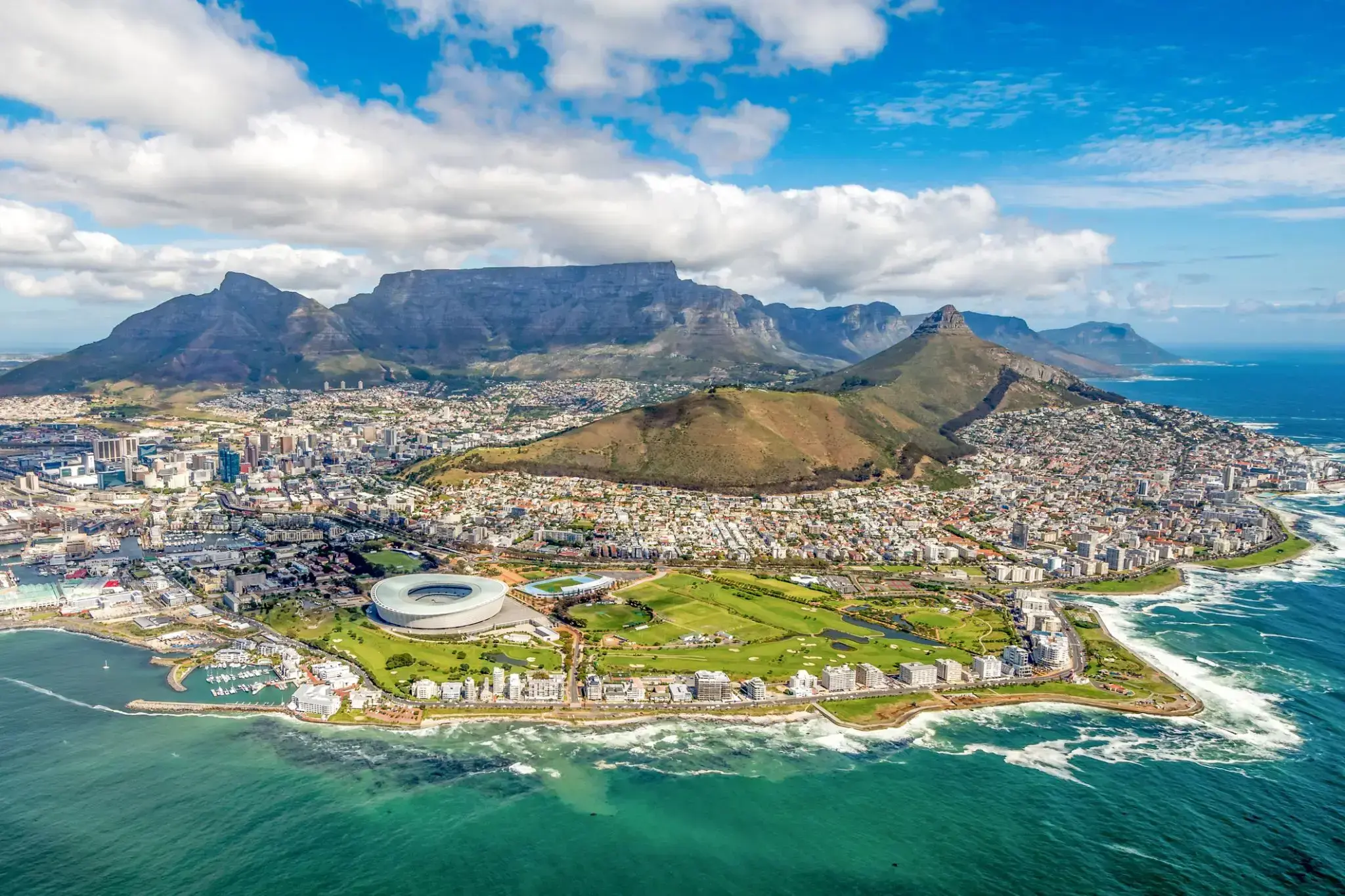
Cape Town is the oldest city in South Africa, colloquially named the Mother City. It is the legislative capital of South Africa and primate city of the Western Cape province. It forms part of the City of Cape Town metropolitan municipality.
The Parliament of South Africa sits in Cape Town. The other two capitals are located in Pretoria (the administrative capital where the Presidency is based) and Bloemfontein (the judicial capital where the Supreme Court of Appeal is located). The city is known for its harbour, for its natural setting in the Cape Floristic Region, and for landmarks such as Table Mountain and Cape Point. As of 2014, it is the 10th most populous city in Africa and home to 64% of the Western Cape's population. It is one of the most multicultural cities in the world, reflecting its role as a major destination for immigrants and expatriates to South Africa. The city was named the World Design Capital for 2014 by the International Council of Societies of Industrial Design. In 2014, Cape Town was named the best place in the world to visit by both The New York Times and The Daily Telegraph.
Located on the shore of Table Bay, Cape Town, as the oldest urban area in South Africa, was developed by the Dutch East India Company (VOC) as a supply station for Dutch ships sailing to East Africa, India, and the Far East. Jan van Riebeeck's arrival on 6 April 1652 established Dutch Cape Colony, the first permanent European settlement in South Africa. Cape Town outgrew its original purpose as the first European outpost at the Castle of Good Hope, becoming the economic and cultural hub of the Cape Colony. Until the Witwatersrand Gold Rush and the development of Johannesburg, Cape Town was the largest city in South Africa.
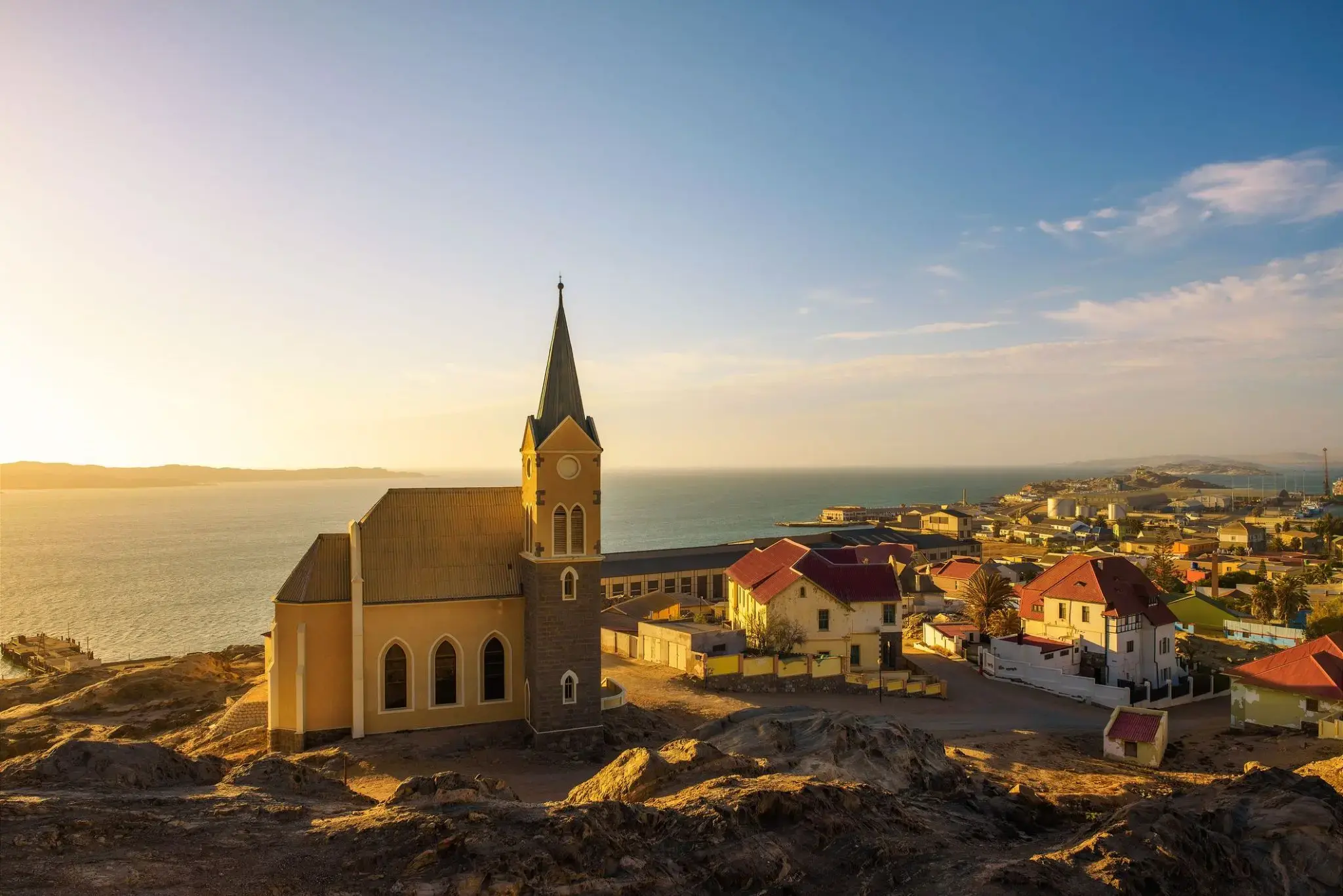
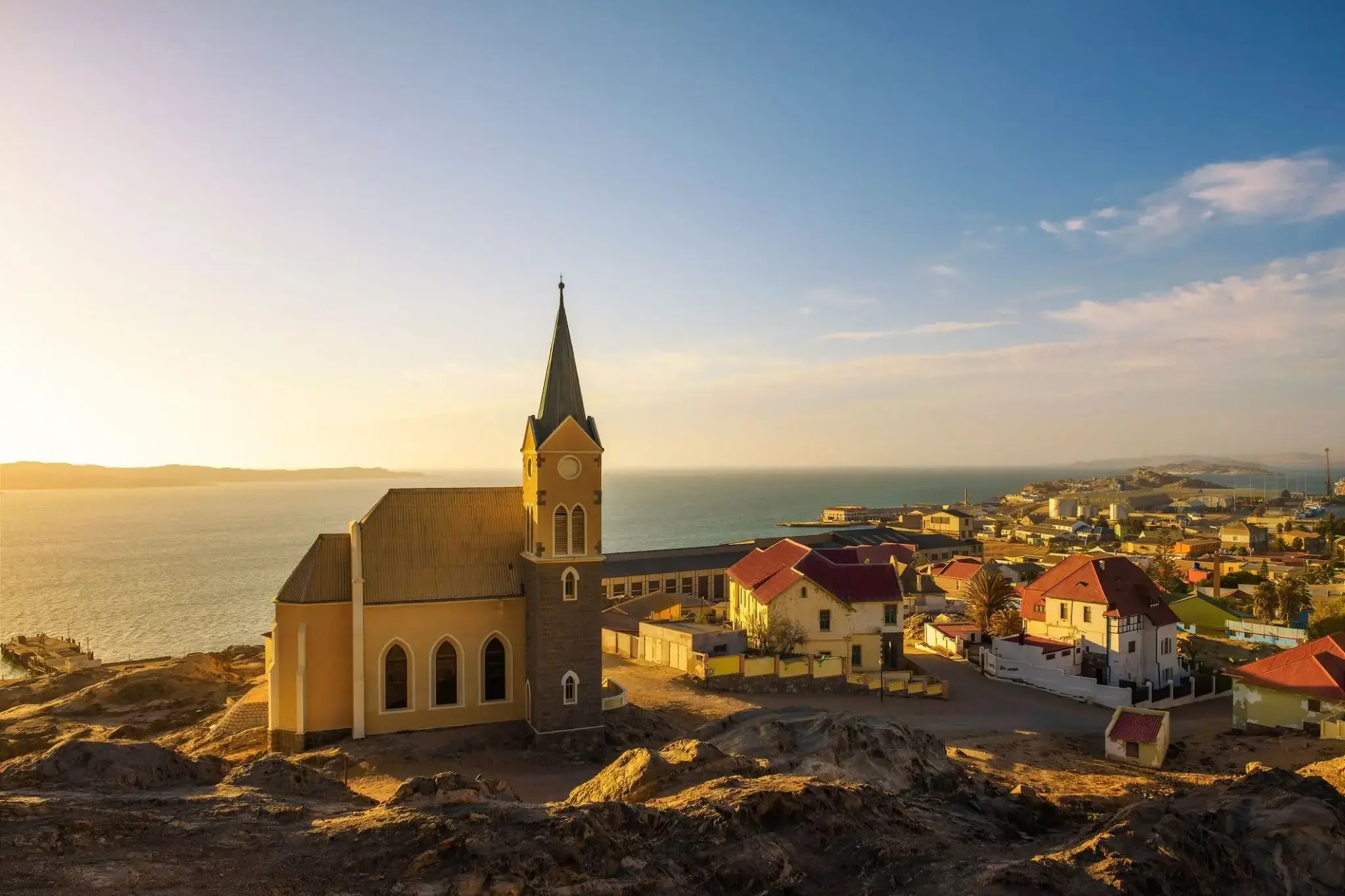
Narrow cobbled streets lead to colorful pastel houses, welcoming visitors to Luderitz. Nestled between desert dunes and the Atlantic Ocean, this town retains a unique charm reminiscent of the early 20th century. Colonial architecture blends with the sea air, while cozy cafes reflect the town’s German past.
Luderitz is renowned for its breathtaking coastal landscapes: turquoise waters of the bay and rugged coves merge seamlessly with golden desert sands. Adventurers can explore the abandoned diamond mining settlement of Kolmanskop or wander through lagoons where pelicans and flamingos gather. This corner of Namibia offers a unique blend of culture, history, and nature, waiting to be discovered.
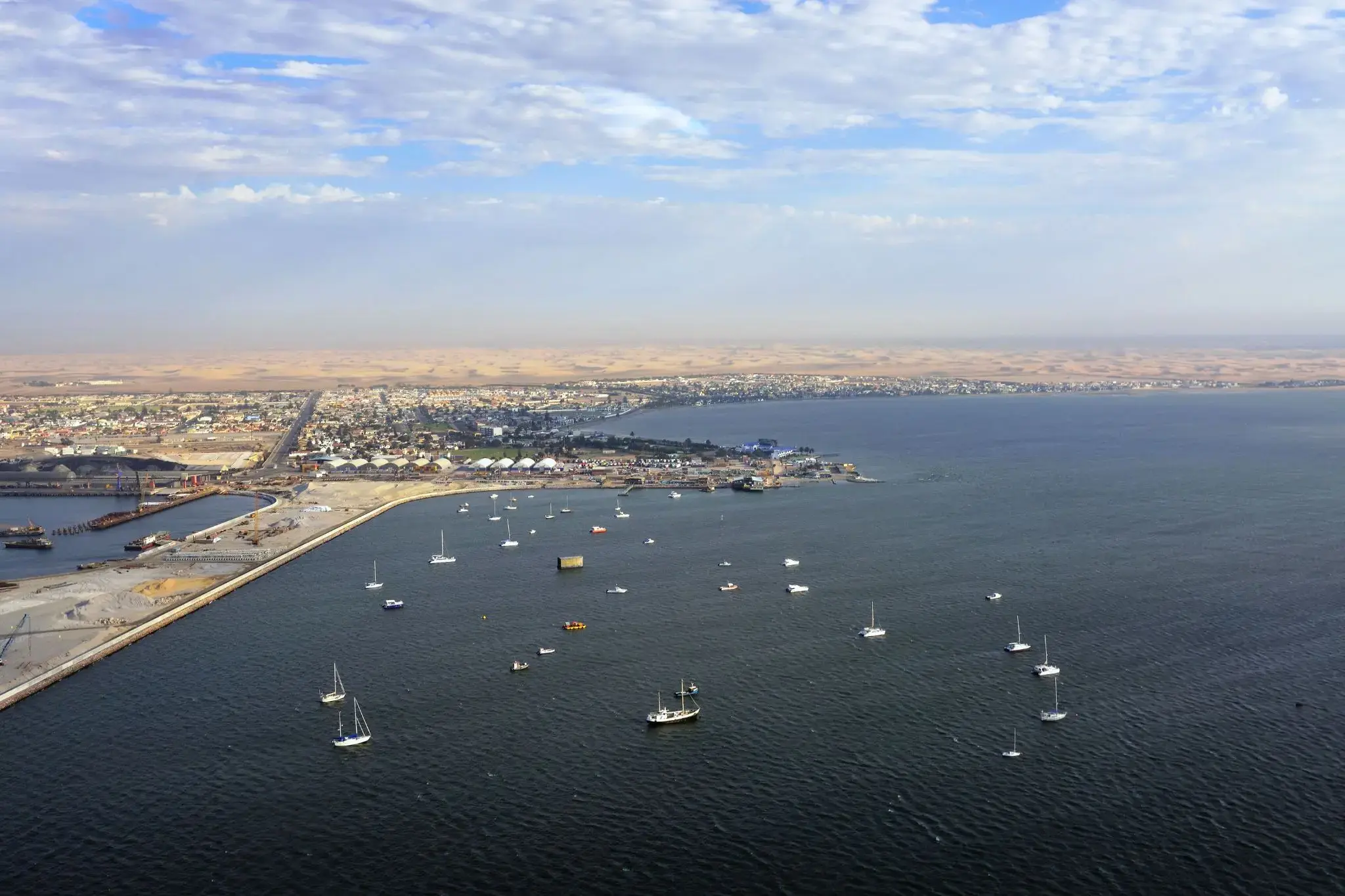
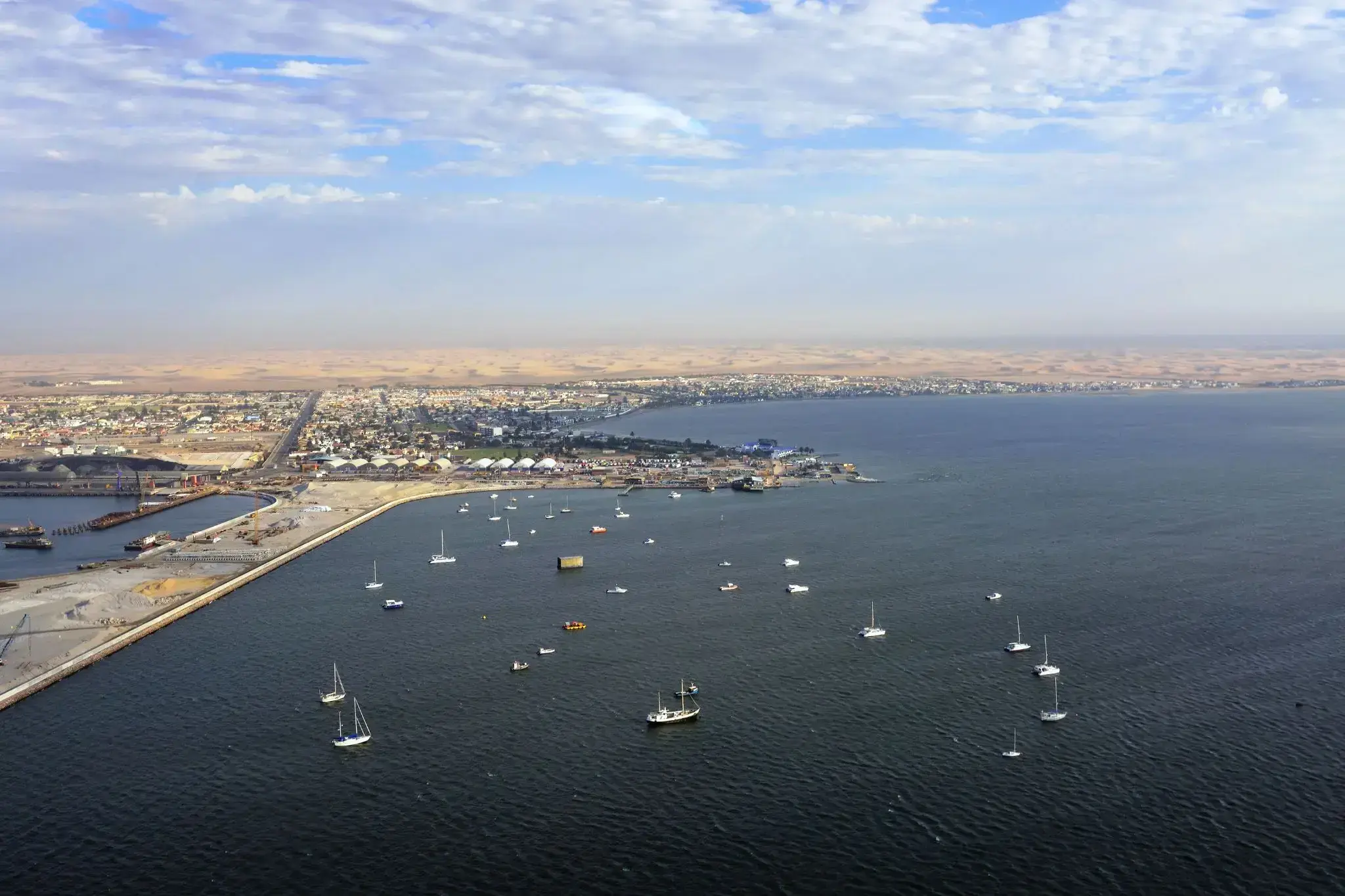
Walvis Bay — Namibia’s Maritime Gateway
Walvis Bay, located on the Atlantic coast of Namibia, offers a rare blend of an industrial port and a natural haven. The town is famous for its vast lagoon—one of the largest in Africa—where flamingos, pelicans, and other water birds can be observed year-round. It's also one of the top places on the continent to witness marine life: visitors often take boat trips to spot seals, dolphins, and sometimes even whales. The lagoon is also popular among kite surfers and windsurfers, thanks to steady winds and wide open waters.
The city plays a key economic role as Namibia’s main port and a hub for the fishing industry. Yet, Walvis Bay attracts not only through its utility, but also through the stunning desert landscapes of the Namib, which begin just outside the town. The famous dunes and lunar scenery create a unique contrast with the ocean. This rare meeting of sea and desert makes Walvis Bay an unforgettable stop on any journey through southwestern Africa.
Walvis Bay — Namibia’s Maritime Gateway
Walvis Bay, located on the Atlantic coast of Namibia, offers a rare blend of an industrial port and a natural haven. The town is famous for its vast lagoon—one of the largest in Africa—where flamingos, pelicans, and other water birds can be observed year-round. It's also one of the top places on the continent to witness marine life: visitors often take boat trips to spot seals, dolphins, and sometimes even whales. The lagoon is also popular among kite surfers and windsurfers, thanks to steady winds and wide open waters.
The city plays a key economic role as Namibia’s main port and a hub for the fishing industry. Yet, Walvis Bay attracts not only through its utility, but also through the stunning desert landscapes of the Namib, which begin just outside the town. The famous dunes and lunar scenery create a unique contrast with the ocean. This rare meeting of sea and desert makes Walvis Bay an unforgettable stop on any journey through southwestern Africa.
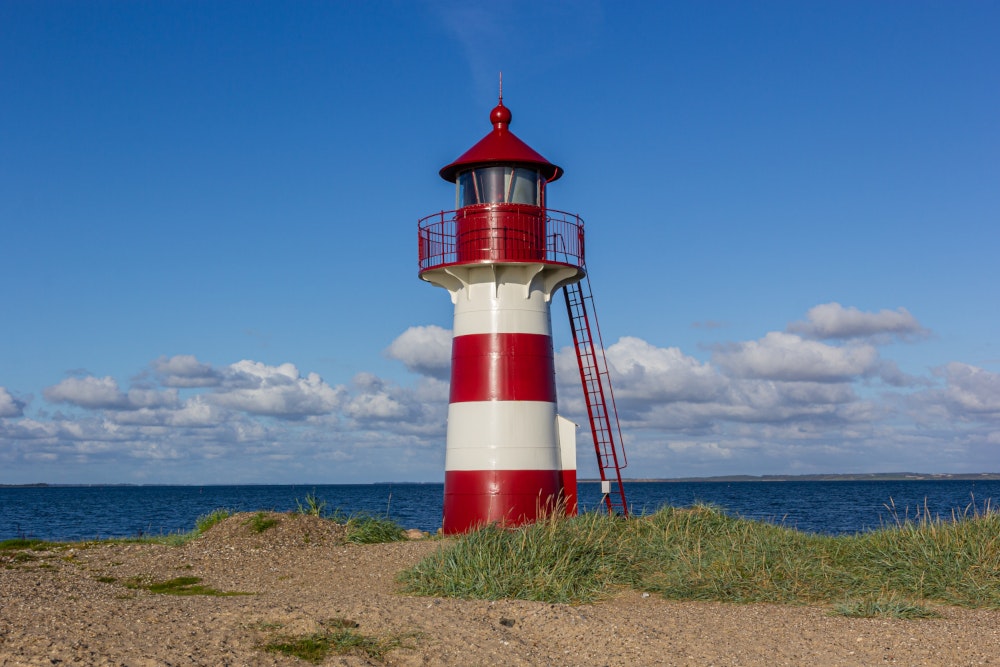
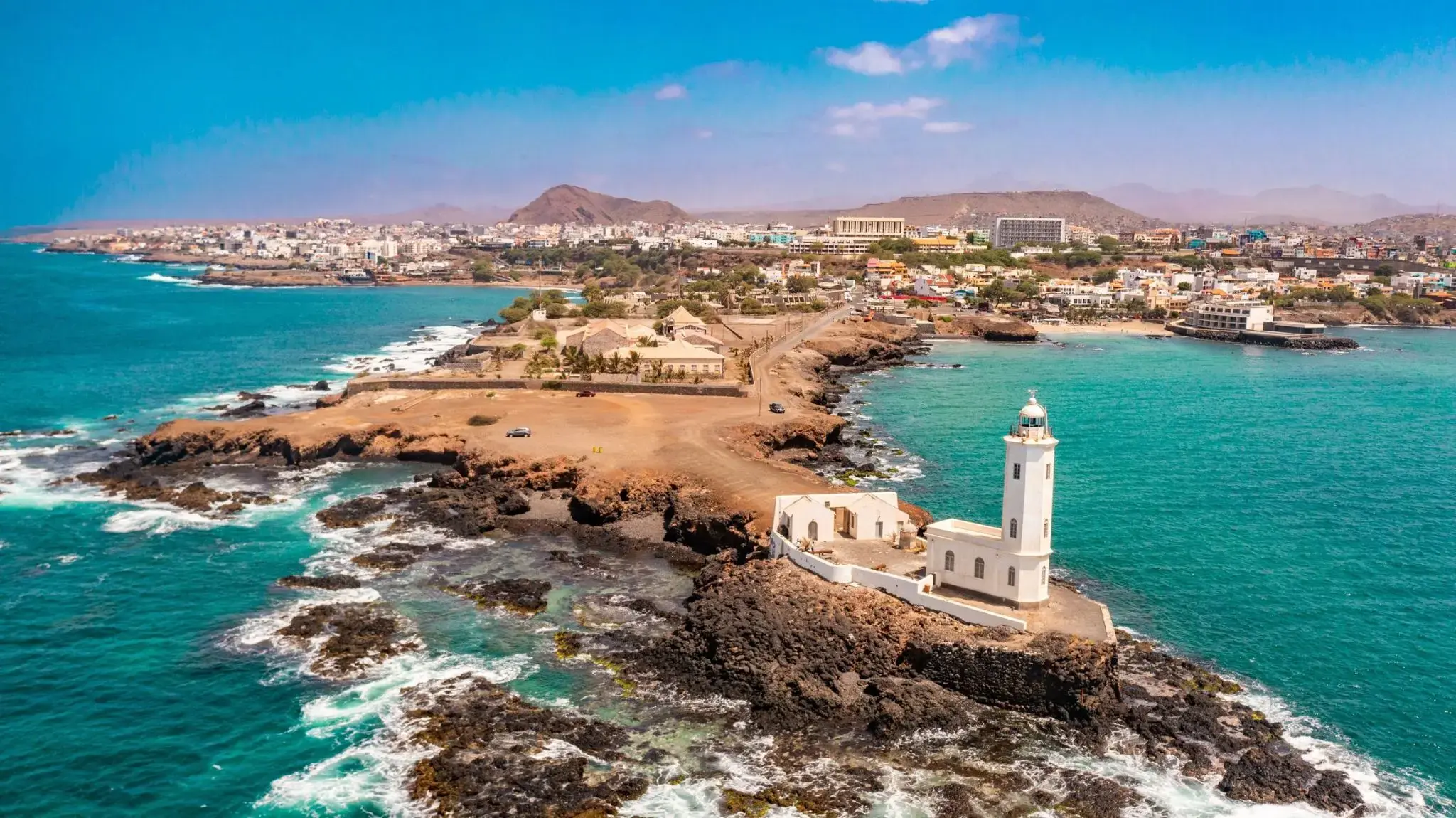


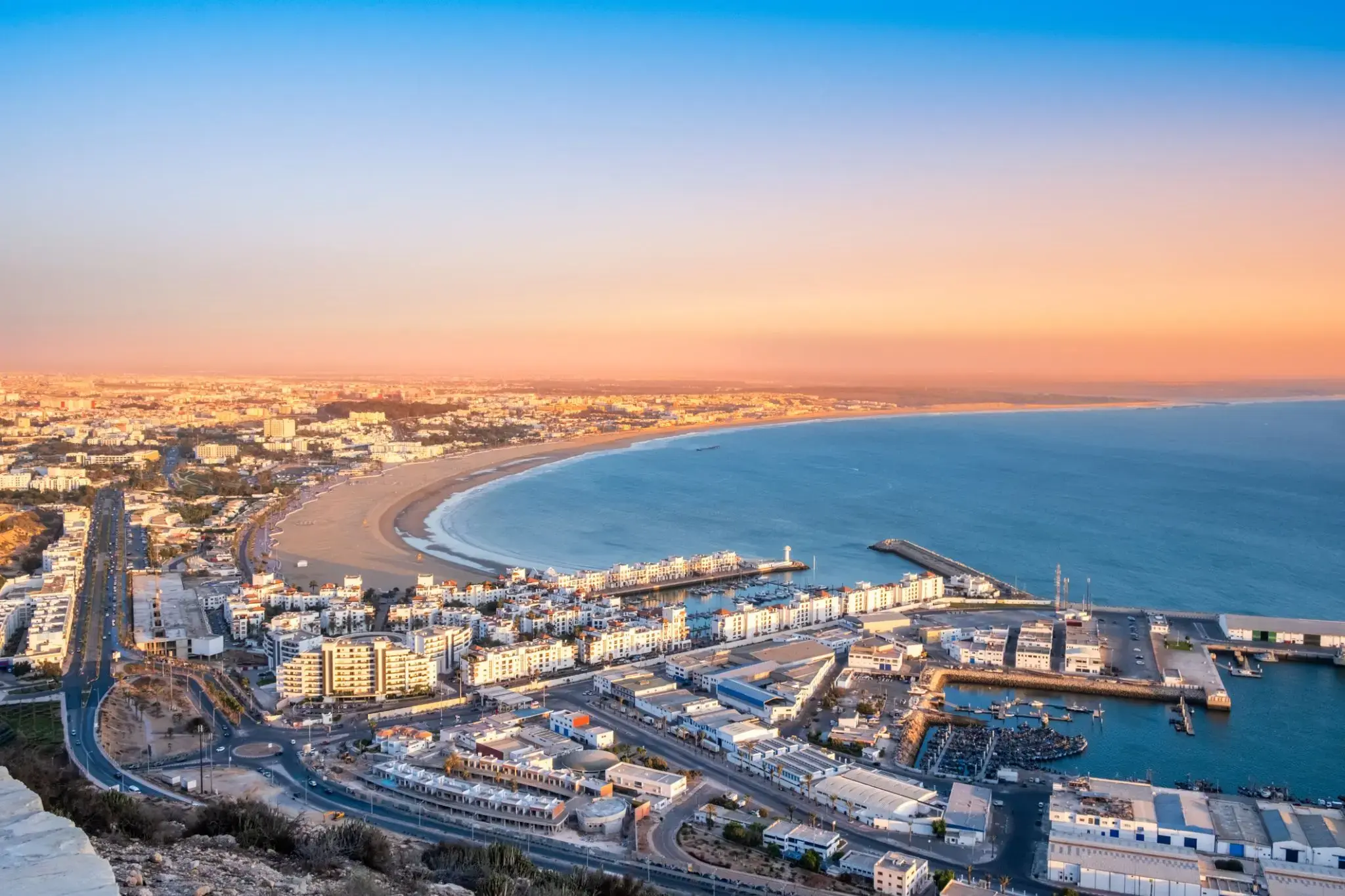
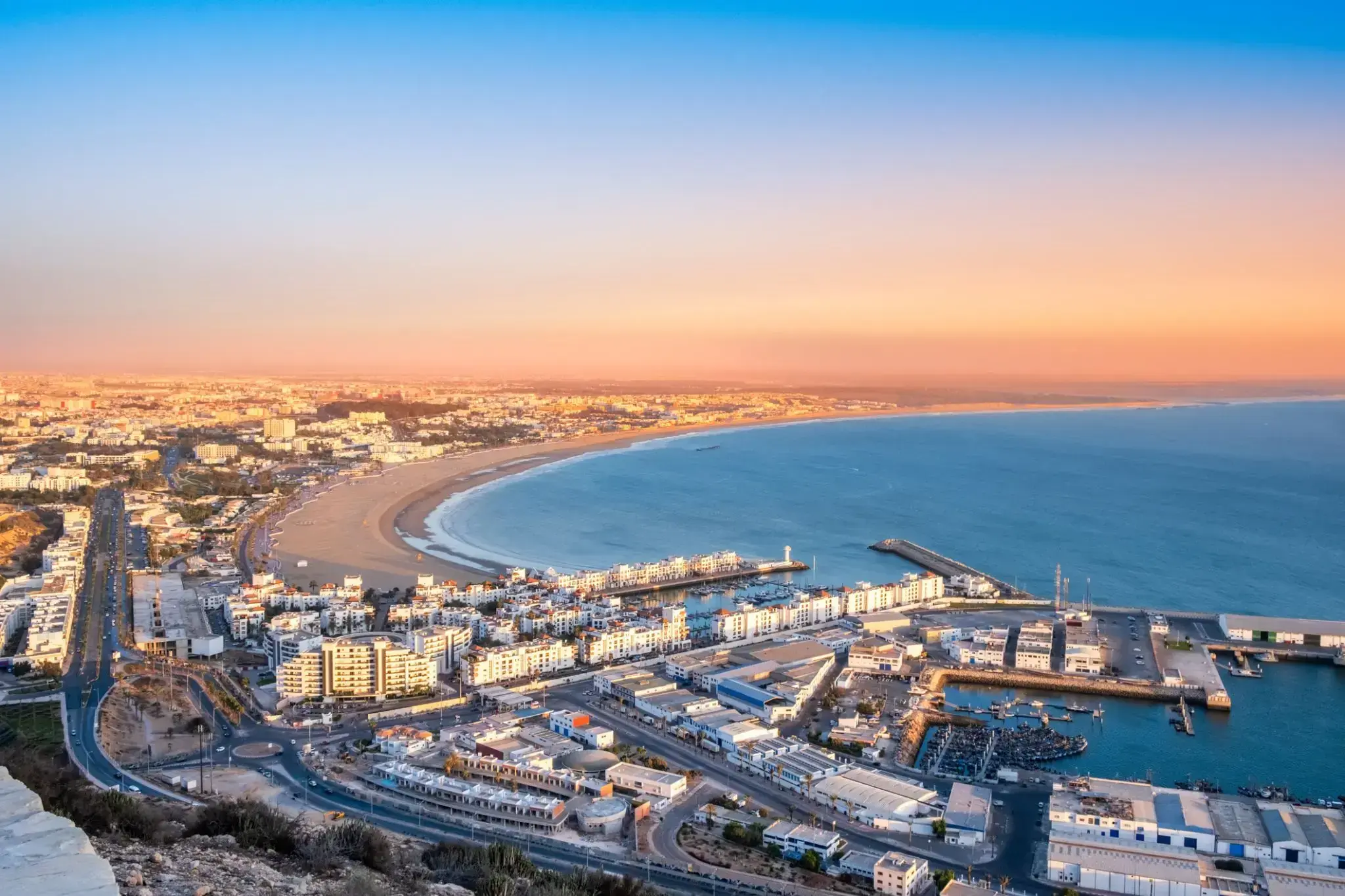
Agadir is the center of modern tourism in Morocco. Agadir Beach stretches for 10 km. The beautiful golden beach, surrounded by eucalyptus greenery and pine trees, is the most beautiful place among all Moroccan resorts. In Agadir, tourists will always find entertainment to their liking. Here you can ride camels or thoroughbred horses, play golf and tennis, smoke hookah, or experience all the delights of sea fishing. In the city's restaurants, you can taste the freshest and most delicious seafood, the assortment of which is simply magnificent: sea bass, sardines, tuna, shrimp, lobsters, crayfish. You can buy alcohol everywhere, but remember to do it before eight in the evening. And don't forget to visit the Medina of Agadir – a city built by an Italian architect. Inside the Medina, there are more than 30 shops and workshops.
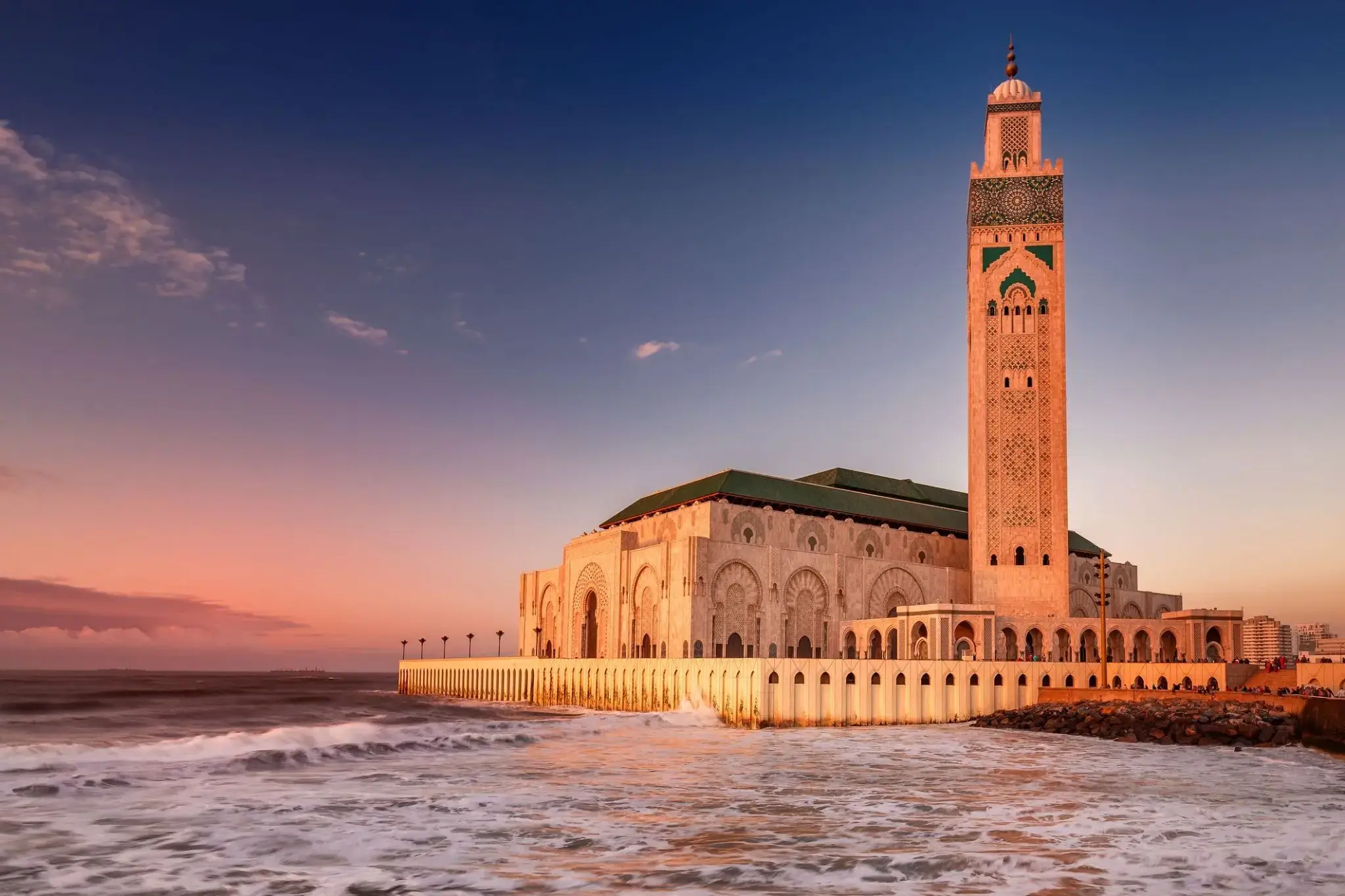
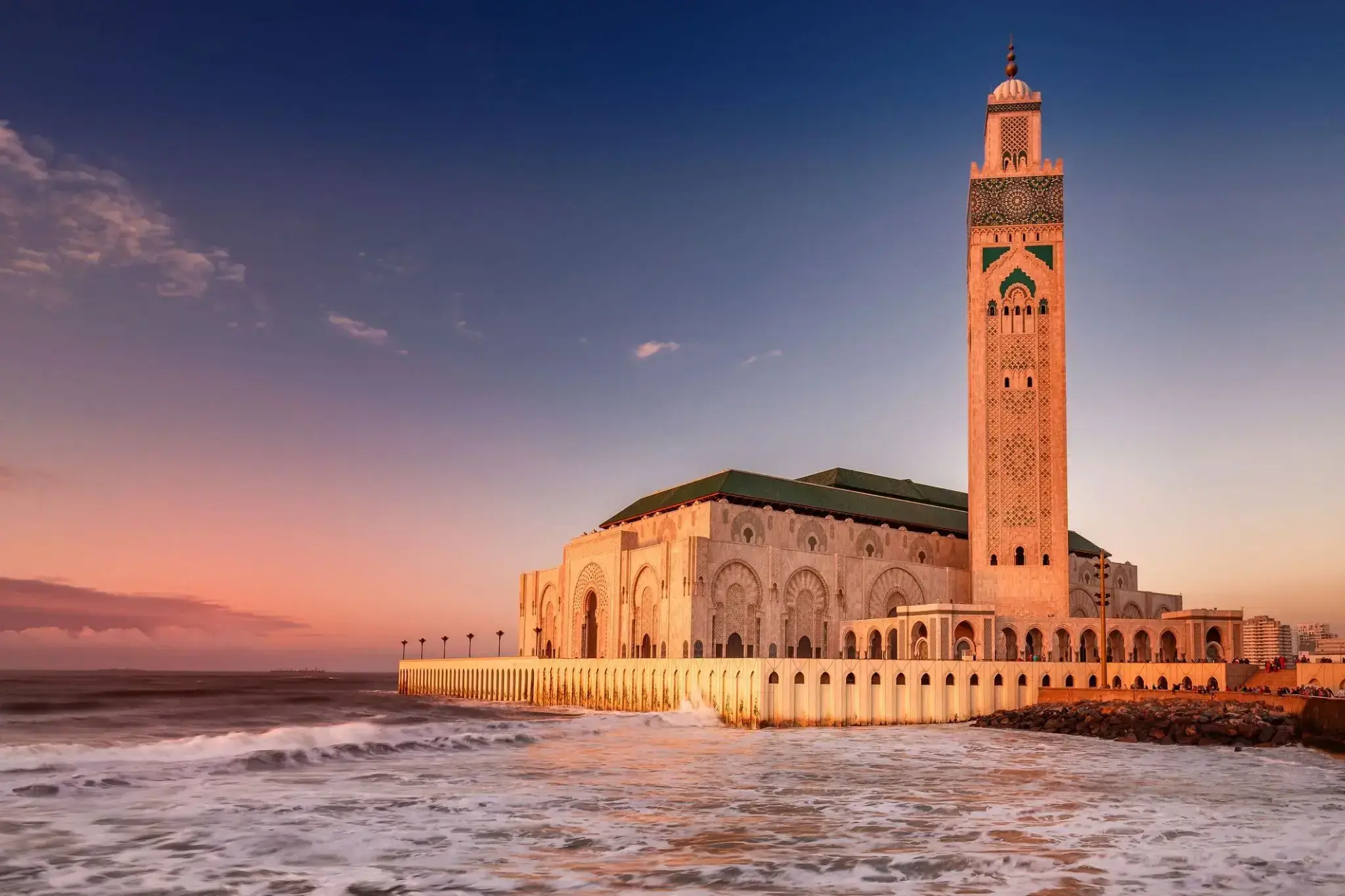
Casablanca located in the central-western part of Morocco and bordering the Atlantic Ocean, is the largest city in Morocco. It is also the largest city in the Maghreb region, as well as one of the largest and most important cities in Africa, both economically and demographically.
Casablanca is Morocco's chief port and one of the largest financial centers on the continent. According to the 2014 population estimate, the city has a population of about 3.35 million in the urban area and over 6.8 million in the Casablanca-Settat region. Casablanca is considered the economic and business center of Morocco, although the national political capital is Rabat.
The leading Moroccan companies and international many corporations doing business in the country have their headquarters and main industrial facilities in Casablanca. Recent industrial statistics show Casablanca retains its historical position as the main industrial zone of the country. The Port of Casablanca is one of the largest artificial ports in the world, and the second largest port of North Africa, after Tanger-Med 40 km (25 mi) east of Tangier. Casablanca also hosts the primary naval base for the Royal Moroccan Navy.
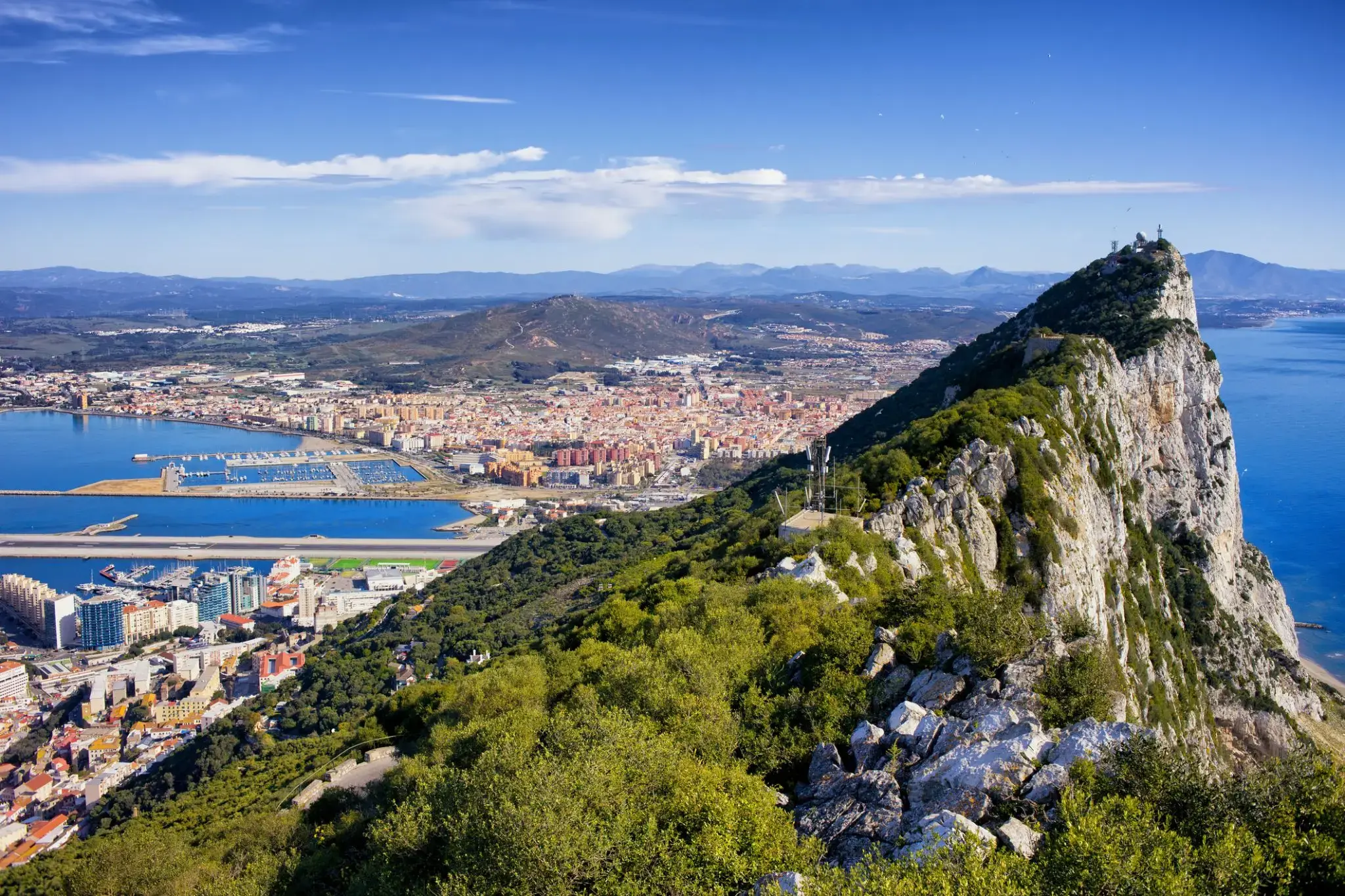
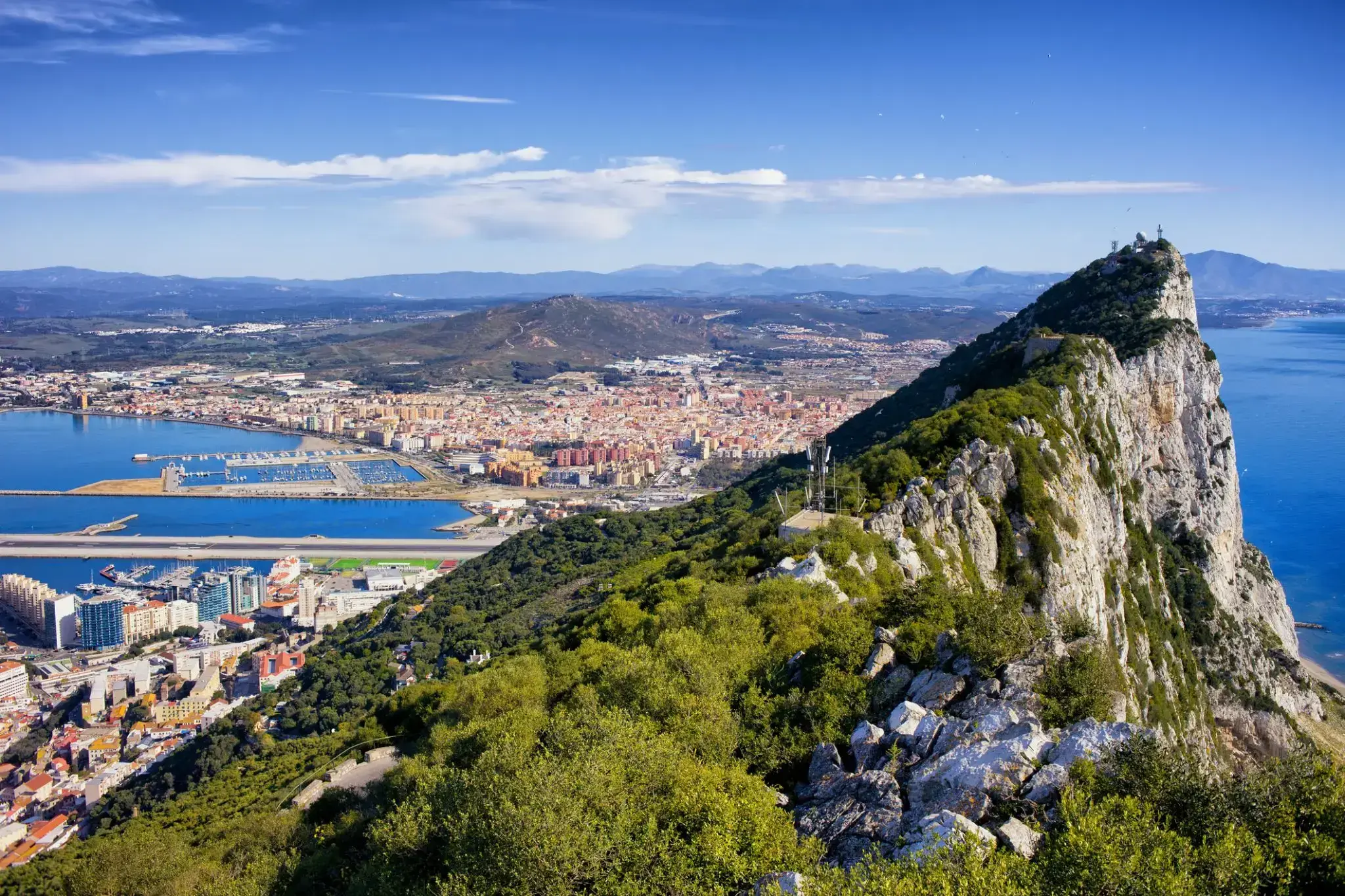
Gibraltar is a British Overseas Territory located at the southern tip of the Iberian Peninsula. It has an area of 6.7 km2 (2.6 sq mi) and is bordered to the north by Spain. The landscape is dominated by the Rock of Gibraltar at the foot of which is a densely populated town area, home to over 30,000 people, primarily Gibraltarians. It shares a maritime border with Morocco.
In 1704, Anglo-Dutch forces captured Gibraltar from Spain during the War of the Spanish Succession on behalf of the Habsburg claim to the Spanish throne. The territory was ceded to Great Britain in perpetuity under the Treaty of Utrechtin 1713. During World War II it was an important base for the Royal Navy as it controlled the entrance and exit to the Mediterranean Sea, which is only 8 miles (13 km) wide at this naval choke point. It remains strategically important, with half the world's seaborne trade passing through the strait. Today Gibraltar's economy is based largely on tourism, online gambling, financial services and cargo ship refuelling.
The sovereignty of Gibraltar is a point of contention in Anglo-Spanish relations because Spain asserts a claim to the territory. Gibraltarians rejected proposals for Spanish sovereignty in a 1967 referendum and, in a 2002 referendum, the idea of shared sovereignty was also rejected.
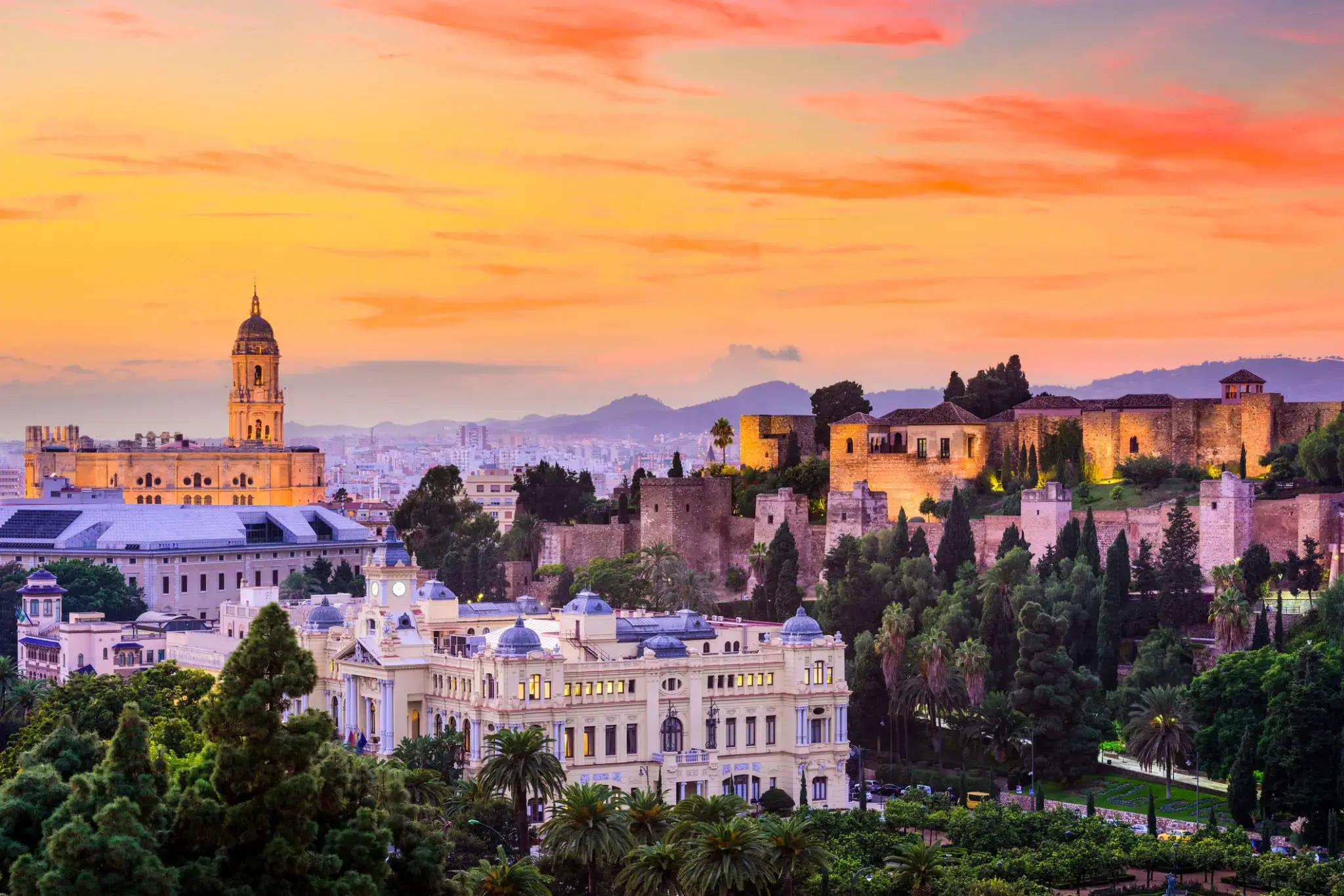
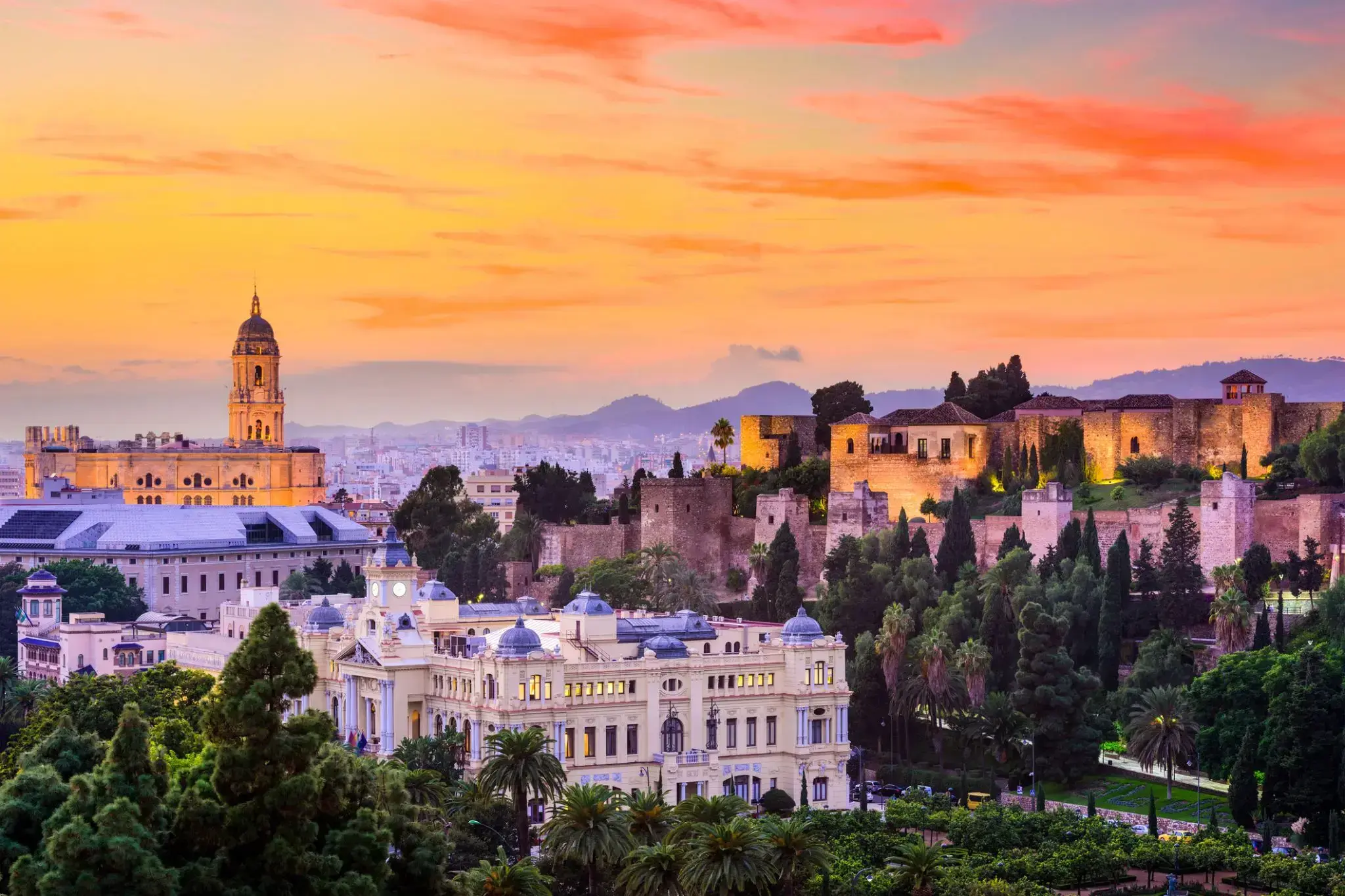
Málaga is a municipality, capital of the Province of Málaga, in the Autonomous Community of Andalusia, Spain. With a population of 569,130 in 2015, it is the second-most populous city of Andalusia and the sixth-largest in Spain. The southernmost large city in Europe, it lies on the Costa del Sol (Coast of the Sun) of the Mediterranean, about 100 kilometres (62.14 miles) east of the Strait of Gibraltar and about 130 km (80.78 mi) north of Africa.
Málaga's history spans about 2,800 years, making it one of the oldest cities in the world. According to most scholars, it was founded about 770 BC by the Phoenicians as Malaka From the 6th century BC the city was under the hegemony of Ancient Carthage, and from 218 BC, it was ruled by the Roman Republic and then empire as Malaca (Latin). After the fall of the empire and the end of Visigothic rule, it was under Islamic rule as Mālaqah for 800 years, but in 1487, the Crown of Castille gained control after the Reconquista. The archaeological remains and monuments from the Phoenician, Roman, Arabic and Christian eras make the historic center of the city an "open museum", displaying its history of nearly 3,000 years.
This important cultural infrastructure and the artistic heritage have culminated in the nomination of Málaga as a candidate for the 2016 European Capital of Culture.
The painter and sculptor Pablo Picasso, Hebrew poet and Jewish philosopher Solomon Ibn Gabirol and the actor Antonio Banderas were born in Málaga. The magnum opus of Cuban composer Ernesto Lecuona, "Malagueña", is named after the music of this region of Spain.
The most important business sectors in Málaga are tourism, construction and technology services, but other sectors such as transportation and logistics are beginning to expand. The Andalusia Technology Park (PTA), located in Málaga, has enjoyed significant growth since its inauguration in 1992. Málaga is the main economic and financial centre of southern Spain, home of the region's largest bank, Unicaja, and the fourth-ranking city in economic activity in Spain behind Madrid, Barcelona and Valencia.
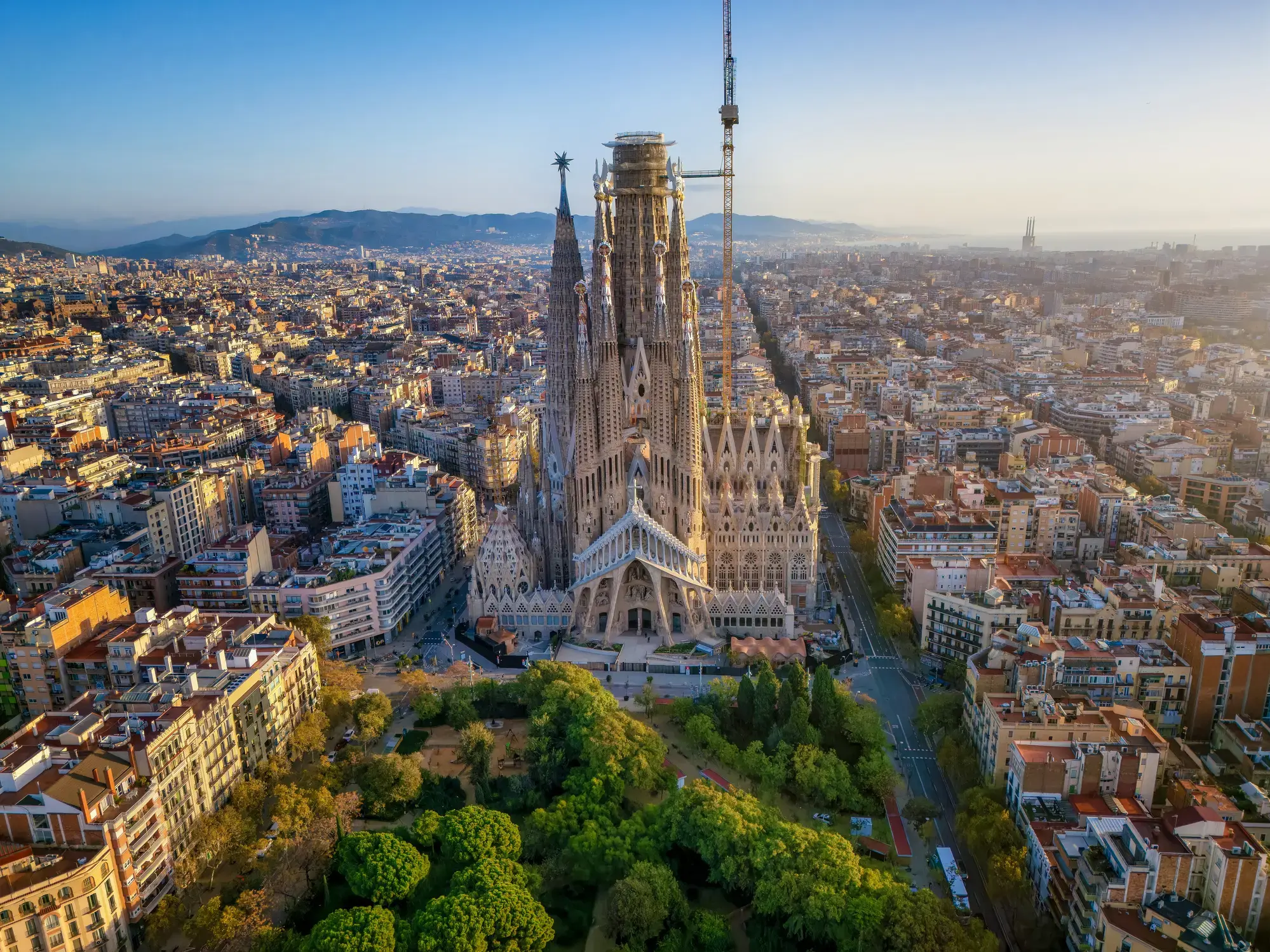
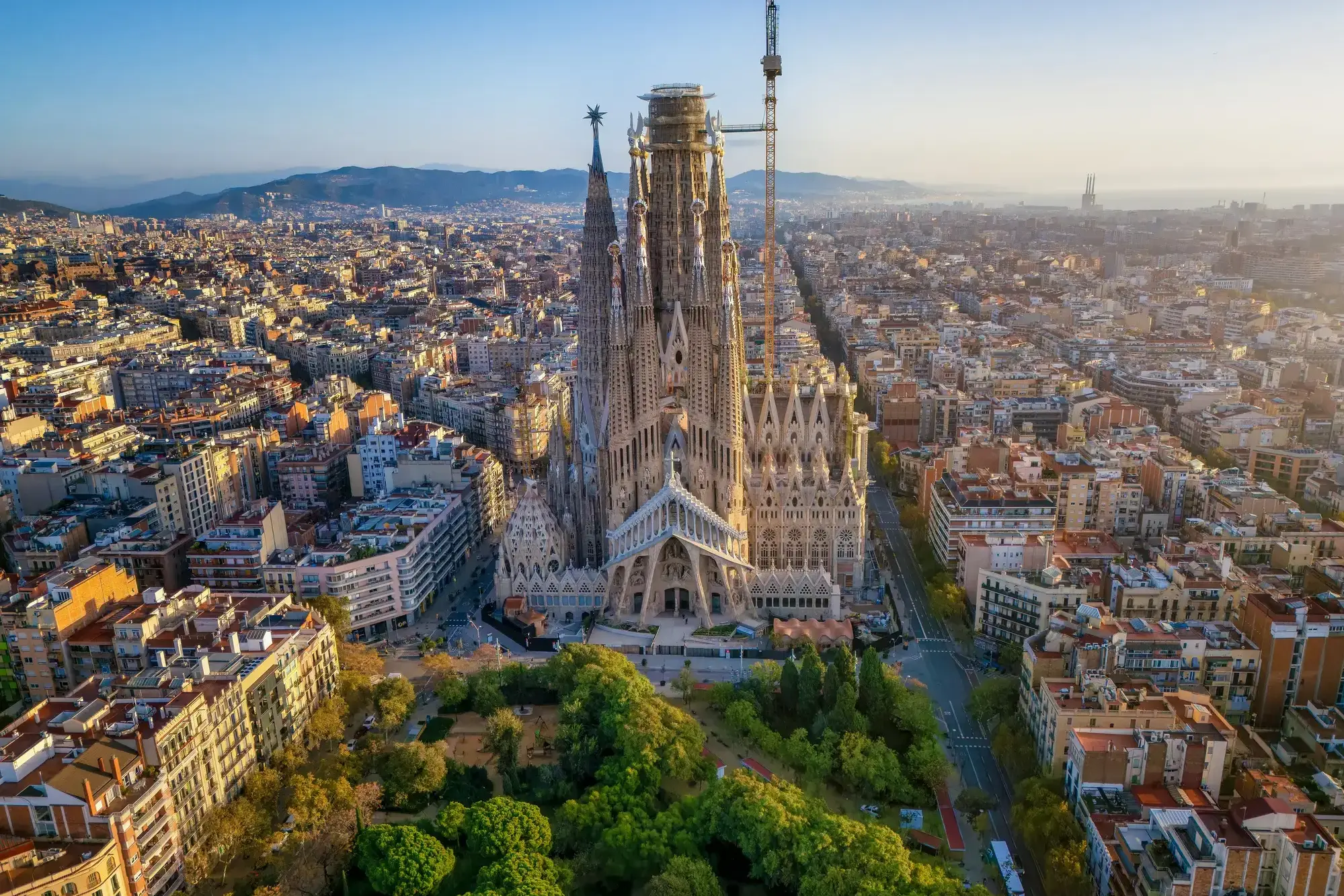
Barcelona is a city in Spain. It is the capital and largest city of Catalonia, as well as the second most populous municipality of Spain. With a population of 1.6 million within city limits, its urban area extends to numerous neighbouring municipalities within the Province of Barcelona and is home to around 4.8 million people, making it the sixth most populous urban area in the European Union after Paris, London, Madrid, the Ruhr area and Milan. It is one of the largest metropolises on the Mediterranean Sea, located on the coast between the mouths of the rivers Llobregat and Besòs, and bounded to the west by the Serra de Collserola mountain range, the tallest peak of which is 512 metres (1,680 feet) high.
Founded as a Roman city, in the Middle Ages Barcelona became the capital of the County of Barcelona. After merging with the Kingdom of Aragon, Barcelona continued to be an important city in the Crown of Aragon as an economic and administrative centre of this Crown and the capital of the Principality of Catalonia. Barcelona has a rich cultural heritage and is today an important cultural centre and a major tourist destination. Particularly renowned are the architectural works of Antoni Gaudí and Lluís Domènech i Montaner, which have been designated UNESCO World Heritage Sites. The headquarters of the Union for the Mediterranean are located in Barcelona. The city is known for hosting the 1992 Summer Olympics as well as world-class conferences and expositions and also many international sport tournaments.
Barcelona is one of the world's leading tourist, economic, trade fair and cultural centres, and its influence in commerce, education, entertainment, media, fashion, science, and the arts all contribute to its status as one of the world's major global cities. It is a major cultural and economic centre in southwestern Europe, 24th in the world (before Zürich, after Frankfurt) and a financial centre. In 2008 it was the fourth most economically powerful city by GDP in the European Union and 35th in the world with GDP amounting to €177 billion. In 2012 Barcelona had a GDP of $170 billion; and it was leading Spain in employment rate in that moment.
In 2009 the city was ranked Europe's third and one of the world's most successful as a city brand. In the same year the city was ranked Europe's fourth best city for business and fastest improving European city, with growth improved by 17% per year, and the city has been experiencing strong and renewed growth for the past three years. Since 2011 Barcelona has been a leading smart city in Europe. Barcelona is a transport hub, with the Port of Barcelona being one of Europe's principal seaports and busiest European passenger port, an international airport, Barcelona–El Prat Airport, which handles over 50 million passengers per year, an extensive motorway network, and a high-speed rail line with a link to France and the rest of Europe.